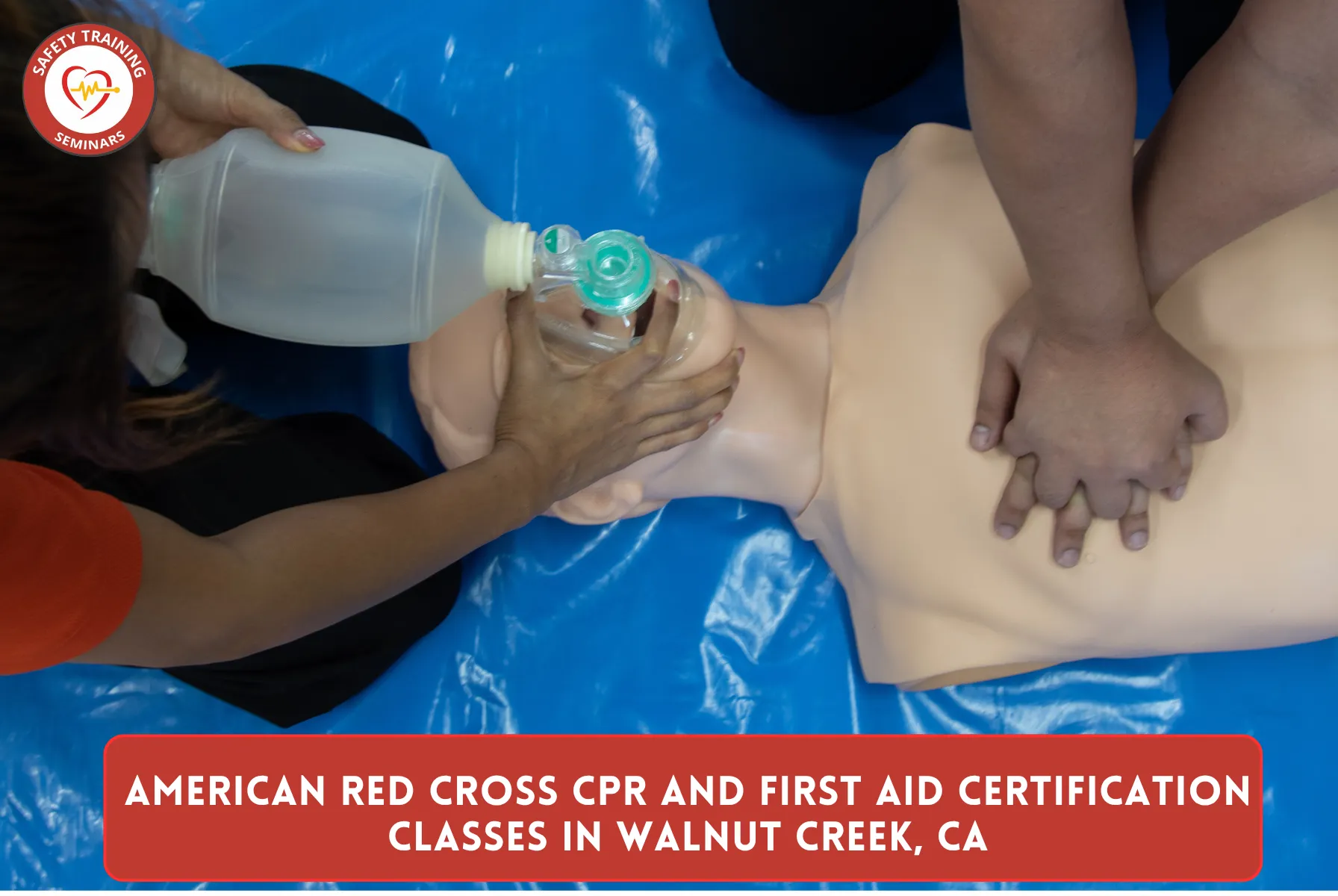
Walnut Creek has a broad mix of healthcare, professional, retail, fitness, childcare, and community services, so people searching for CPR and First Aid training can have very different reasons for taking a class. A healthcare worker may need training for professional requirements, while a childcare provider, teacher, fitness professional, workplace employee, parent, or caregiver may be looking for a different combination of skills.
For anyone researching American Red Cross CPR and First Aid Certification Classes in Walnut Creek, CA, the most important step is to identify the specific training requirement before choosing a course. American Red Cross training includes CPR, First Aid, CPR/AED, and combined First Aid/CPR/AED options. Depending on the course, learners may choose classroom, online, or blended formats, with hands-on skills demonstrations available in applicable in-person and blended programs.
The right course therefore depends less on simply finding a CPR class and more on understanding what your employer, school, professional program, or personal situation actually requires.
Which CPR or First Aid Course Makes Sense?
Walnut Creek residents can consider several American Red Cross training categories, including CPR, First Aid, CPR/AED, and First Aid/CPR/AED. The appropriate option depends on whether the goal is CPR-focused training, broader emergency-response education, AED instruction, or a combination of these subjects.
If training is required for work or school, confirm the exact course and learning format before registering.
CPR, First Aid, and AED: What Is the Difference?
CPR and First Aid are closely related but address different emergency-response needs.
CPR training focuses on responding to cardiac arrest and breathing emergencies. Depending on the course selected, American Red Cross CPR training can address adult and child CPR and may incorporate AED education. The organization offers classroom, online, and blended learning options.
First Aid training has a broader focus. Rather than concentrating specifically on cardiac or breathing emergencies, First Aid education teaches participants how to recognize and respond to a range of injuries and medical emergencies.
An AED, or automated external defibrillator, complements CPR training. CPR/AED courses combine CPR education with instruction about when and how an AED may be used during a sudden cardiac emergency.
These subjects are frequently combined because a person responding to an emergency may need more than one type of skill. However, that does not mean every course contains the same material. Course descriptions and requirements should be checked individually.
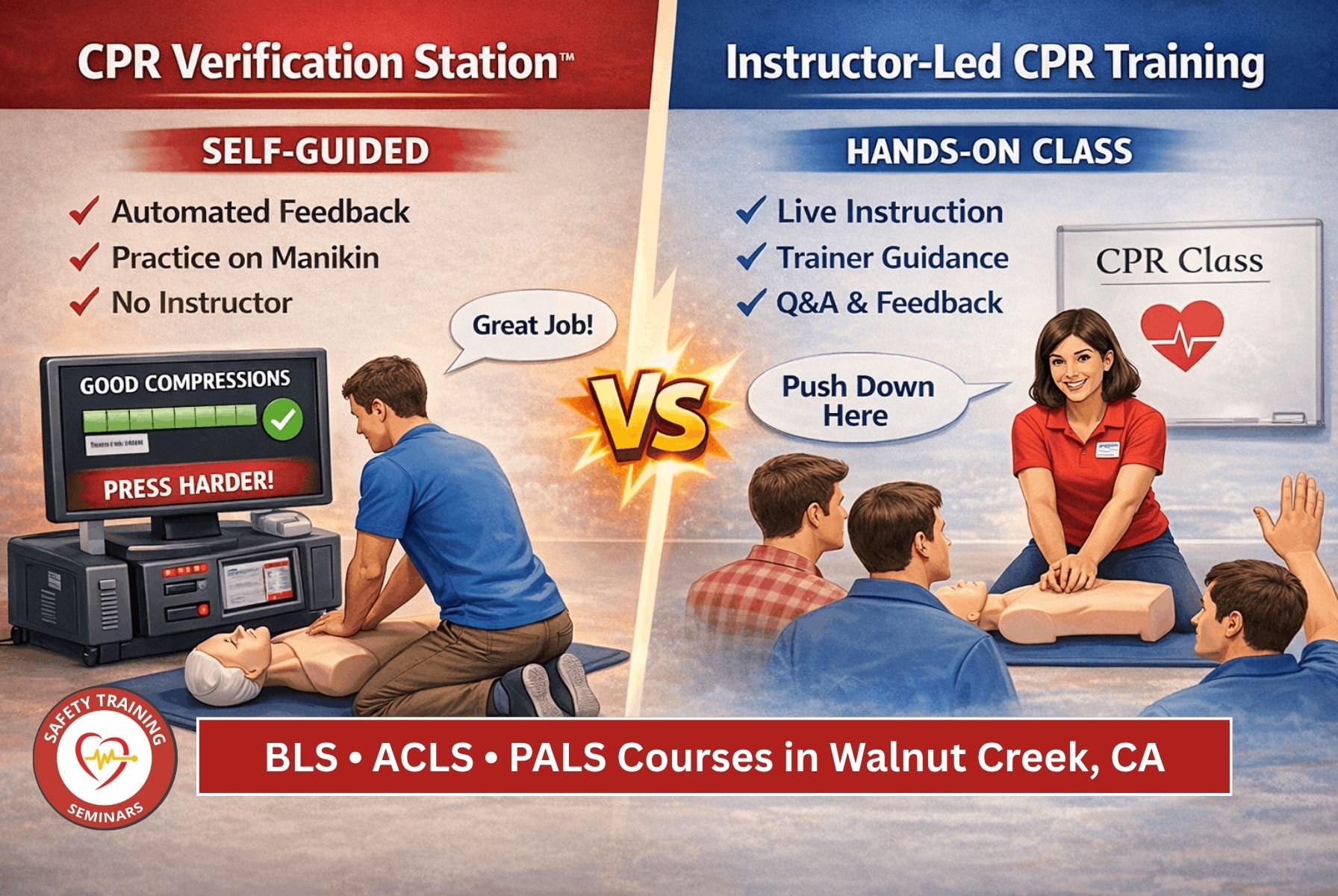
For people who need to demonstrate physical skills, the course format deserves particular attention. American Red Cross in-person CPR training includes hands-on skills sessions, while blended programs combine online learning with an in-person skills component. Online-only courses do not provide the same instructor skills demonstration.
CPR Training for Walnut Creek Workers and Professionals
The reason someone needs CPR training can shape the type of class they should select.
A healthcare professional may have a specific professional or employer requirement. A teacher may need training related to working with students. A fitness professional may want CPR/AED education because of responsibilities in an exercise environment. A business employee may be designated by an employer to receive emergency-response training.
American Red Cross CPR programs can include adult and child CPR depending on the selected course. Learners should therefore check the course description rather than assuming that every CPR class is identical.
Hands-on practice can be particularly relevant when training is connected to employment or professional requirements. In an in-person class, participants can practice skills and demonstrate proficiency to an instructor. Blended learning can provide a combination of self-paced education and an in-person skills session.
Someone simply looking for general CPR knowledge may have different priorities from someone who has been told by an employer or school to obtain a specific certification.
For local learners, CPR and First Aid classes in Walnut Creek provide a starting point for researching available training information.
First Aid and AED Training in the Walnut Creek Community
First Aid can be useful for people whose responsibilities involve other individuals rather than only their own workplace tasks.
Consider a few local examples.
A childcare provider may need both CPR and First Aid because the role involves responsibility for children. A fitness professional may encounter an emergency during a workout or class and may therefore seek CPR/AED education. A parent or caregiver may choose First Aid and CPR training for personal preparedness. A small-business employee may be designated to assist with workplace emergencies.
Walnut Creek’s downtown district includes businesses and services in areas such as medical care, health and wellness, childcare, education, and fitness. That creates a variety of workplace settings where emergency-response education may be relevant.
The exact requirement, however, comes from the employer, organization, school, or professional program—not simply from the city where someone works.
Who Typically Takes CPR and First Aid Classes?
Healthcare Workers and Students
Healthcare professionals and students in healthcare-related programs may encounter specific CPR or emergency-response training requirements. The appropriate course can depend on the role, clinical setting, employer, or educational program.
Teachers and Childcare Providers
People working with children may be asked by their employer or organization to maintain CPR and First Aid training. The required course can depend on the setting and the organization’s policies.
Workplace Employees
Workplace First Aid requirements depend on the circumstances and hazards of the particular workplace. OSHA explains that workplace medical and First Aid programs depend on the conditions of each worksite and employer.
That means employees should not assume that one generic CPR course satisfies every workplace requirement.
Coaches and Fitness Professionals
Coaches, trainers, and fitness employees may seek CPR/AED or First Aid training because their work involves supervising people during physical activity. The organization employing them should determine which course is appropriate.
Parents and Caregivers
Parents, family caregivers, and other adults responsible for children or dependents may choose CPR and First Aid training even when no employer requires it.
How to Choose the Right Training
A simple comparison can help:
| Training Type | Typical Focus |
| CPR | CPR-focused emergency-response skills |
| First Aid | Response to injuries and medical emergencies |
| CPR/AED | CPR combined with AED-related training |
| First Aid/CPR/AED | Broader emergency-response training covering multiple areas |
This is a general comparison, not a statement of legal or employment requirements.
Before enrolling, ask the organization requesting your training:
- Does it require CPR only?
- Is First Aid also required?
- Is AED training part of the requirement?
- Must the course include hands-on skills?
- Is online learning acceptable?
- Is blended learning acceptable?
- Does the organization specify a particular course or training provider?
This matters because completing a course that does not satisfy the original requirement can mean having to take additional training.
Why Hands-On Practice Can Matter
There is an important difference between learning CPR concepts online and demonstrating CPR skills to an instructor.
American Red Cross in-person CPR classes include hands-on skills sessions. Blended programs combine online instruction with an in-person skills session. Online-only courses allow self-paced learning but do not provide the same opportunity to demonstrate proficiency to an instructor.
For someone taking CPR training purely for personal education, an online format may be considered differently from someone whose employer or professional program requires demonstrated skills.
If a Walnut Creek employer or school has told you that you need CPR certification, ask about the required format before choosing an online course simply because it is convenient.
Local Training Considerations in Walnut Creek
Walnut Creek’s downtown area functions as a significant commercial and service center, with businesses spanning retail, restaurants, professional services, healthcare, wellness, childcare, and fitness. That variety means CPR and First Aid learners may come from very different occupational backgrounds.
The local setting also makes course selection particularly important for people who work with the public. A retail employee, childcare worker, healthcare support employee, fitness professional, or office worker may each have different responsibilities and therefore different training requirements.
For residents coming from nearby East Bay communities, the practical question is still the same: determine the required course first, then check the local training options that fit that requirement.
Safety Training Seminars in Walnut Creek
Safety Training Seminars provides a local training option for people researching CPR and First Aid education in Walnut Creek.
The Safety Training Seminars Walnut Creek downtown CPR Training Center Address: 2363 Boulevard Circle, Suite 18, Walnut Creek, CA 94595.
Before registering, review the available course information carefully. Look at the course category, format, skills requirements, and any other information relevant to your reason for taking the training.
If your employer, school, healthcare organization, or professional program has given you a specific requirement, compare that requirement with the course information before completing registration.
You can also review local CPR training information for Walnut Creek when researching available options.
Why Consider Safety Training Seminars?
Safety Training Seminars gives Walnut Creek residents and workers a local option to investigate when looking for CPR and related emergency-response training.
The most useful way to evaluate any training provider is to begin with the course you actually need. Once you know whether your requirement calls for CPR, First Aid, CPR/AED, or First Aid/CPR/AED training, you can review the available course information and determine whether it matches.
A local training location can also be relevant for people who prefer an in-person skills session or need to complete a particular training component locally.
Rather than choosing a course based only on its title, verify the details with the organization that requested your training.
Frequently Asked Questions
Does Walnut Creek have CPR and First Aid training options?
Yes. People in Walnut Creek can research CPR, First Aid, CPR/AED, and combined First Aid/CPR/AED training options. The available format and course content depend on the particular program. If training is needed for work or school, confirm the required course before registering.
Is American Red Cross CPR training available online?
Yes. American Red Cross offers online CPR training as well as in-person and blended options. However, online-only courses do not include an instructor skills demonstration. Someone who needs demonstrated CPR proficiency should check whether an in-person or blended course is required.
Should a Walnut Creek childcare provider take CPR and First Aid together?
Possibly. Childcare employers or organizations may require both CPR and First Aid, but the exact requirement varies. A childcare provider should confirm the required training with the employer or licensing authority before choosing between CPR-only and combined First Aid/CPR/AED training.
Can an employer require hands-on CPR training?
Yes, an employer or workplace program may specify a particular course or format. OSHA’s workplace First Aid guidance explains that workplace medical and First Aid programs depend on the circumstances and hazards of the individual workplace. Employees should therefore confirm their employer’s specific training requirement.
What is the difference between CPR/AED and First Aid/CPR/AED?
CPR/AED focuses on CPR and AED-related emergency response. First Aid/CPR/AED combines those subjects with broader First Aid education. If a school or employer has requested a specific combination, use that requirement when selecting your course.
Where can I find local CPR training in Walnut Creek?
Safety Training Seminars provides a Walnut Creek training location for people researching CPR and related emergency-response education. Before registering, check the specific course information and confirm that the training format and content match the requirement from your employer, school, or professional organization.
Choosing CPR and First Aid Training in Walnut Creek
CPR, First Aid, and AED training each address different parts of emergency response, although they are often offered together. The appropriate choice depends on why you are taking the course.
For a healthcare worker, student, childcare provider, fitness professional, workplace employee, parent, or caregiver in Walnut Creek, the best starting point is to identify the actual training requirement. From there, compare the course type, learning format, hands-on component, and any requirements established by your organization.
Safety Training Seminars offers a local Walnut Creek training option that residents can investigate as part of that process. Before registering, verify the course details with the organization requiring your training so that the class you choose matches your intended use.